
Intelligence history → timeline analytics
Historical trends for competitor pricing, packaging, and features
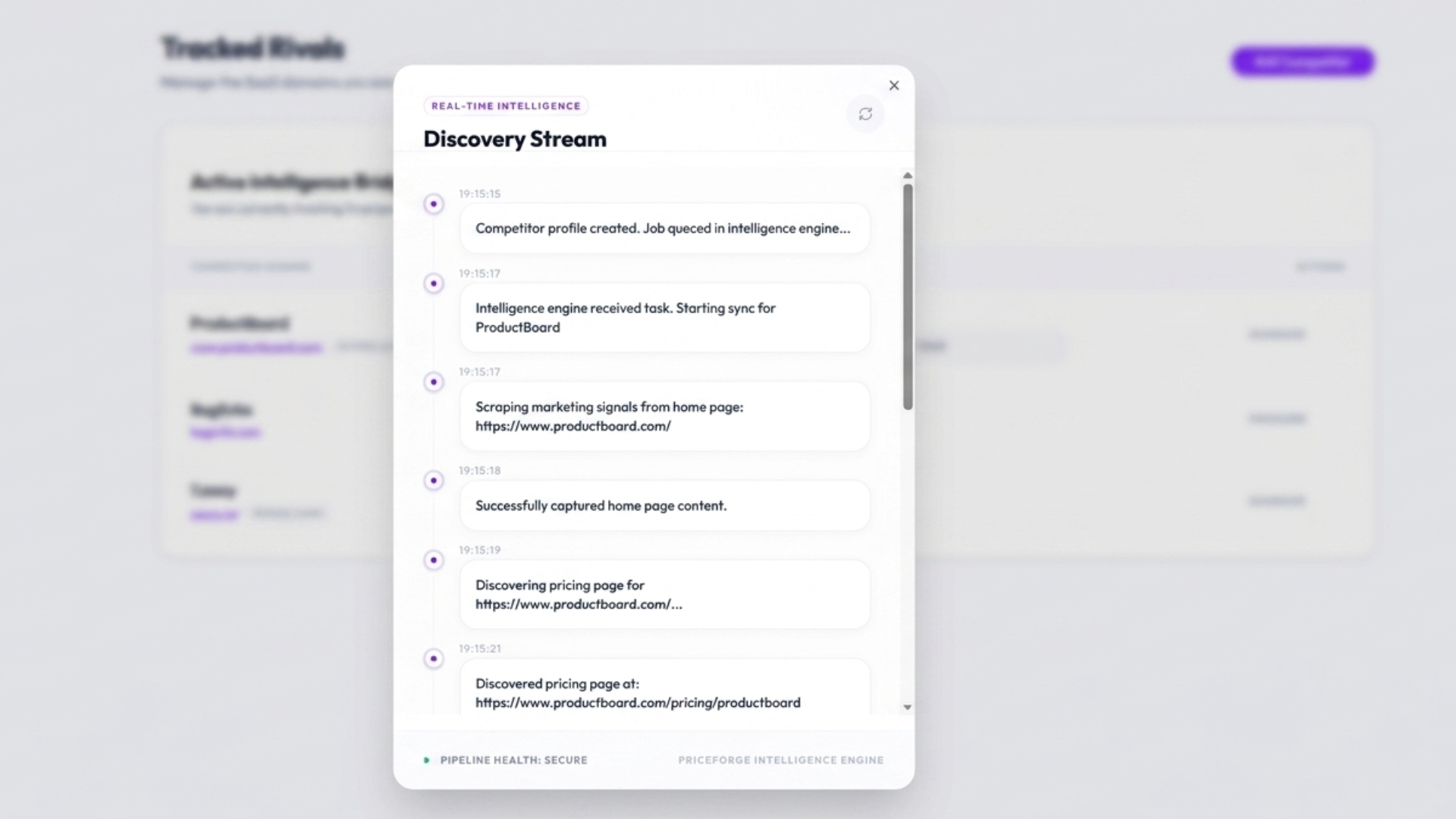
Static scrapes go stale the moment a competitor edits a page. When you add a competitor, PriceForge establishes a live snapshot and a month-to-date change summary right away—then builds timestamped history on every refresh. Pricing, product marketing, and sales enablement can reason about cadence, seasonality, and deal risk using what changed, when, and with proof—not anecdotes.
What teams get from history-first intelligence
- Activity log with timestamps so every scan has a dated record you can align with launches, renewals, and pipeline stages.
- Shift vs stable outcomes so teams focus on material pricing and packaging movements—not cosmetic noise.
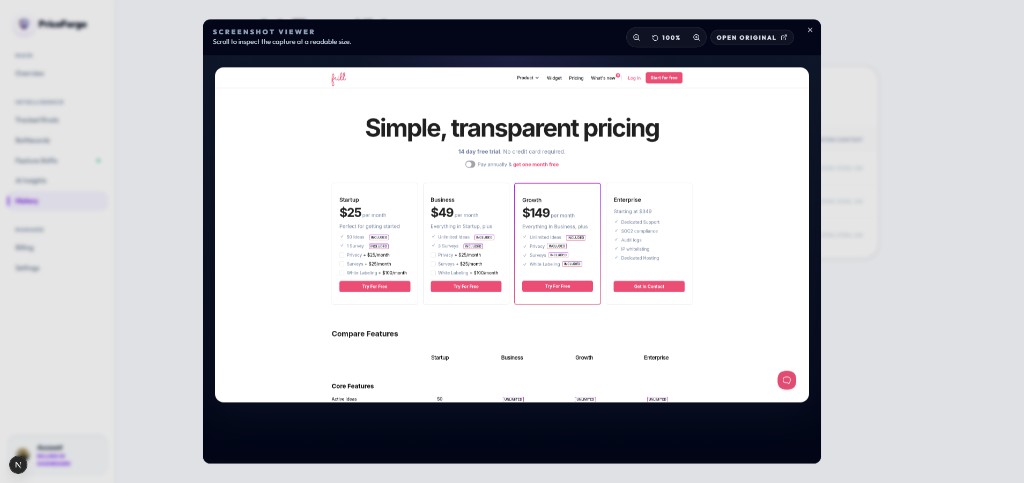
- Visual proof on demand so battlecards and deal reviews can cite evidence the same way specialized pricing trackers and modern CI tools do.
Roadmap: timeline views and trend analytics
The strongest products in this category converge on the same pattern: timestamped snapshots, structured "old value → new value" change logs, and timelines that make cadence obvious. PriceForge is investing in that direction in two phases—because garbage-in breaks every chart.
- Core detection layer: reliable capture, deduplication, field-level interpretation, confidence, and provenance for plan, price, limit, and feature-gating shifts.
- Trend analytics layer:multi-month and multi-year timelines, velocity ("how often"), and simple cadence hints—framed as hypotheses with guardrails, not fortune-telling.
Why historical context changes decisions
- Pricing and packaging: spot tests, tier moves, and usage-based shifts with dates so you are not debating memory in a pricing committee.
- Sales and deal desk:date-stamped proof and velocity ("changed twice in 90 days") help reps handle live objections without stale battlecards.
- Product marketing: see where competitors invest or thin out features over quarters, not from a one-off screenshot.
Trust and governance
Historical intelligence is only useful if leaders can trust it. That is why provenance matters: which URL, which capture window, and what changed in business terms. Anything that sounds predictive should show its evidence trail—sample size, dates, and uncertainty—so teams treat it as planning support, not a guarantee.